

We take the time to truly listen and understand your needs.

















Handling a death in the family is often difficult, and the process can become even more complicated when a loved one passes away without a will. If the death was unexpected, managing the estate and addressing legal and financial matters may feel overwhelming during an already challenging time.
When someone dies without a will, the intestacy laws in Norfolk determine who inherits their estate. If you are facing this situation, a wills attorney at Jennifer Porter Law, PLLC, can explain how these laws apply to your family’s circumstances, guide you through the estate administration process, and help you move forward with confidence.
What Is Included in the Probate Estate?
After a person dies, their assets must be distributed according to their estate plan or, if no plan exists, Virginia law. However, some assets pass directly to surviving owners or named beneficiaries and do not become part of the probate estate. Examples include:
- Life insurance proceeds payable to a named beneficiary
- Property owned by a married couple as tenants by the entirety
- Property owned with a right of survivorship, such as certain real estate or vehicle titles
- Bank accounts and retirement accounts with payable on death (POD) or designated beneficiaries
Assets that remain solely in the deceased person’s name generally become part of the probate estate. Those assets must typically pass through probate before they can be distributed to heirs.
When someone in Norfolk dies without a legally valid will, Virginia’s intestacy laws determine who inherits the probate estate through a process known as intestate succession.
How State Law Distributes the Probate Estate
In some cases, intestate succession in Norfolk is relatively straightforward. However, determining who inherits can become more complicated in larger or blended families.
When someone dies without a surviving spouse, their children or grandchildren generally inherit the entire probate estate. If the deceased person was married, the surviving spouse may inherit all or part of the estate. When all of the deceased person’s children are also children of the surviving spouse, the spouse generally inherits the entire estate. However, if the deceased person had one or more children from another relationship, the surviving spouse receives one-third of the estate, while those children and their descendants inherit the remaining two-thirds.
If the decedent was unmarried and had no children, the probate estate generally passes to their surviving parents. If no parent survives, the estate typically passes to the deceased person’s siblings and their descendants. Beyond parents and siblings, identifying the proper heirs may require a more detailed review of the family tree. For example, a spouse or parent who abandoned the deceased person may lose the right to inherit under certain circumstances.
Identifying Heirs in an Intestate Estate
When an estate must go through probate, the court will appoint a personal representative, also known as an administrator. Under Norfolk’s intestacy laws, the administrator must use diligent inquiry to identify and locate any other heirs who may have a right to inherit from the estate.
If the deceased person has a surviving spouse, children, or other close relatives, this is typically not an issue. However, some cases require an investigator or genealogist to determine and locate every potential heir.
Contact a Norfolk Attorney for Help Navigating the State’s Intestacy Laws
The period after a loved one’s death can be confusing and overwhelming, especially when they did not leave a will. In these cases, our experienced attorneys can explain how intestacy laws in Norfolk apply to your situation. We can assist with probate filings, estate administration, and heirship issues while helping you understand your rights and responsibilities as an heir or personal representative.
Contact Jennifer Porter Law, PLLC, to schedule a consultation today.

Attention to detail that larger firms often overlook.

A focus on quality, not quantity.
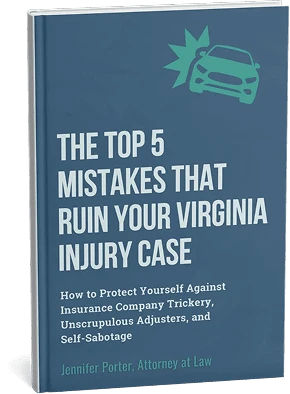
The Top 5 Mistakes That Ruin Your Virginia Injury Case
The Top 5 Mistakes That Ruin Your Virginia Injury Case
HOW TO PROTECT YOURSELF AGAINST INSURANCE COMPANY TRICKERY, UNSCRUPULOUS ADJUSTERS, AND SELF-SABOTAGE
Fill out the form below to download our FREE guide.